
The Calf’s Share
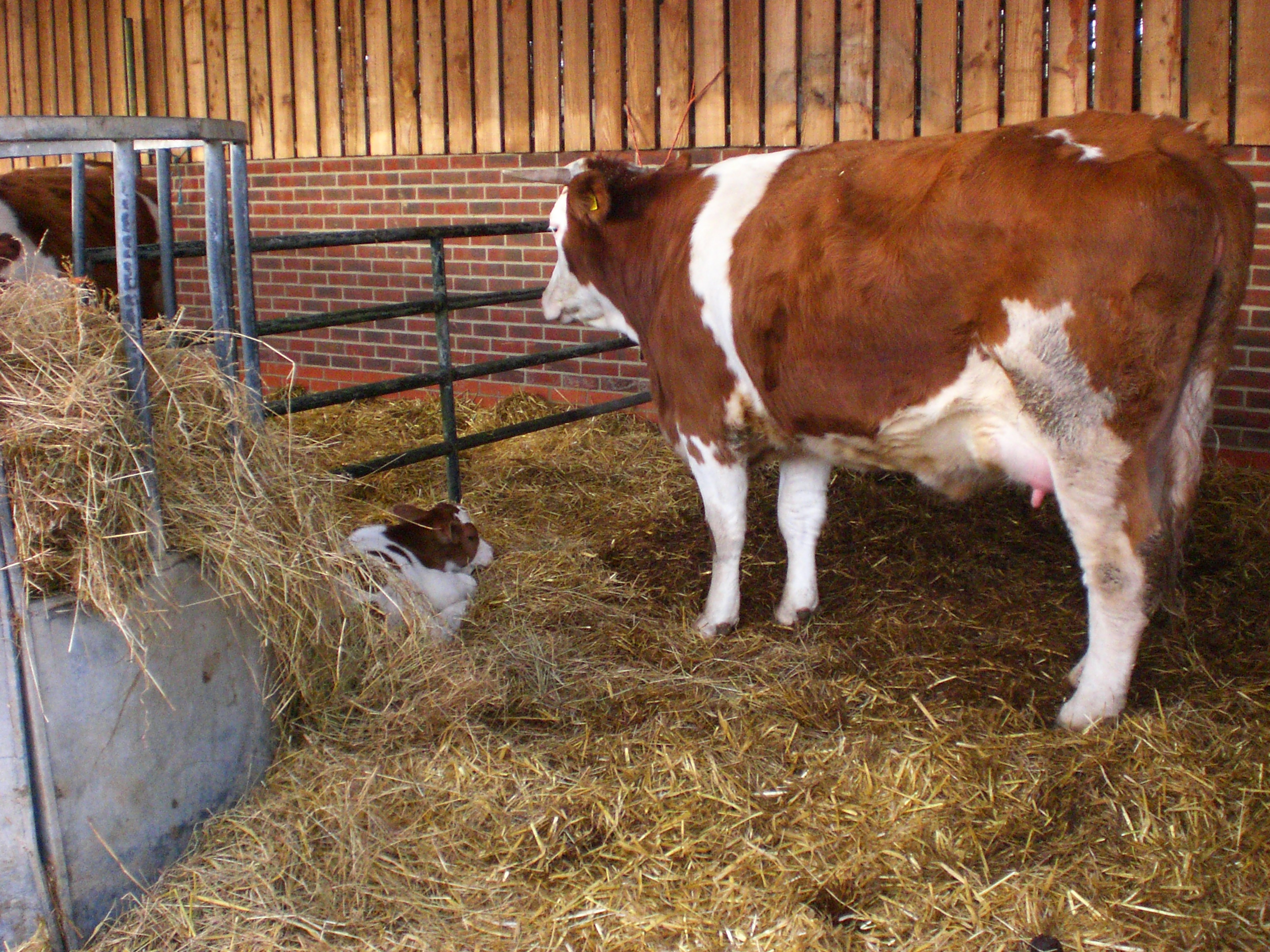
This Website is dedicate to promoting a view about Cow Protection that has the position that the milk of a cow is for people and for its calf. Humans are also the calves of the cow. The milk of the cow is the natural food for mankind and is part of a universal system of symbiosis between different species that have mutual interdependence on each other. The milk of the cow is for nourishing the body and brain of its users. For benefiting mankind and for benefiting its calf. Both should get their proper share.
Some years ago I was asked to review some documents outlining the various legislation and standards of animal welfare. What I particularly noted and mentioned is that the most important welfare issue of the calf and its mother was completely neglected and not dealt with. The cow wants its calf and wants to suckle it with her milk directly from her udder. The calf wants its mother and wants to drink milk directly from her udder. The cow and calf do not want to be separated and they do not want to be killed, yet this most important issue of animal welfare is completely ignored because of economic principles. It is OK legally in animal welfare to kill a cow or calf, yet how can we seriously say this is taking the welfare of the cows into consideration. When economics is at risk the most important welfare position is not included.
In order for humans and the calf to get their share of the milk there are some practical considerations that need to be put in place. Protecting cows does not mean keeping them like wild animals fending for themselves or not being productive. It means working within a system that ensures the calf is satisfied and that there is milk for humans also.
How much milk should the calf get and when. These are natural questions to ask. A system that we developed at Bhaktivedanta Manor is as follows:
- Step one – The calf is born and can drink all it wants. From the moment the calf is born you let the calf drink as much milk as it wants and anything that is left you would take as surplus. For the first five days the milk has much colostrum in it and is generally not suitable for the milk churn (although there are some recipes to use the first milk – after the calf has its share though). Generally you would keep the calf with its mother for two (sometimes stretched to three) weeks and would milk the cow twice a day for whatever was left. We liked to keep the cow and calf together for the whole two weeks in a pen or close pasture. The calf wont drink all the milk (unless the breed or cow is particularly of a type that gives less milk) and there will be surplus milk left over for the milkman and others.
- Step two – The calf has regulated access twice a day. From the end of the second week up to six months old the calf and mother would be grazed or penned separately within their respective grazing groups. It is always preferably in this regard that both the cow and the calf have some other company in their pens or fields. The cow would be brought in for milking twice a day and three teats would be allocated for human use and one teat would be saved for the calf. This figure was based on the idea that a western type cow would give about 20 litres of milk each day and 5 litres was allocated for the calf. The easiest way to calculate 25% of the milk was to keep one of the teats for the calf. European type cows would let their mild down in most cases even if the calf was not physically present. Initially there was some anxiety for the cow and her calf because they were not sure of the system but very quickly they settled into knowing that they would have full satisfaction with each other. Once the milker took milk from the 3 teats he would either release the calf to the mother or would herd the cow to the calf so that the calf could drink its milk directly from its udder. keeping the cow and calf together for about an hour twice a day seemed to be about right for them both. We liked to milk the cows that had the youngest calves first so that there was ample time for time together before the milking herd returned to the field or pen. We liked to milk our cows by hand but the above system can be done using a milking machine as long as you did not use one of the cluster cups at milking time. In the this way there is milk for the satisfaction of the calf and there is milk for the satisfaction of the people.
- Step Three – The calf is weaned but the cow is still milked. Each farm will have to establish a system of weaning that ensures the calf is satisfied and has grown sufficiently. For me this was at about 6 months, although sometimes we stretched it. The calf is weaned from drinking its mothers milk but the milking continues for the cows other dependents (people). Some cows are capable of getting pregnant from as quick as four months old however this would create calving problems and so is not supported. For this reason you would have to have a weaning and calf pen regime in place to ensure that calves were not grazing or housed with potential breeding bulls (young or older). There is another section were we will talk about neutering the bulls and it will cover age and methods. In regards to this section about the age of weaning a calf from its mothers milk you would have to ensure that any bull calves were not in a situation were cows or calves were impregnated accidentally. I was used to a system of weaning the calves at 6 months old after which the heifers were kept in a calf pen away from their mothers and the young bulls were kept with the other bulls or oxen (as long as there was no risk of them joining the cows through broken fences etc)
- Zebu type cows – For Zebu cows you would need to have a different allocation because of the lower milk yield and the difference in behavior. In discussion with other Zebu cow protectors we indicated a system of one month together fully, from month two until month five the calf would have two teats twice a day. From month five the calf would get one teat twice a day. Zebus in most cases will not give milk unless the calf is present and so to have an extended lactation you would most probably have to maintain a system of the calf suckling at least partially for as long as she gave milk
Leave a Comment